Most e-commerce brands think growth starts with more traffic.
More ad spend.
More viral social media posts.
More customers.
But what if the fastest way to grow wasn’t finding new customers at all?
When I audited a footwear brand’s email marketing, I discovered something surprising. Their existing customers and website visitors represented between $59,089 and $172,340 in additional annual revenue, without increasing traffic or ad spend.
The opportunity was hiding inside their email list.
This case study breaks down where that revenue was being lost, why it was happening, and the exact changes that could recover it over the next 12 months.
The baseline: the brand was growing… but revenue was quietly leaking away
Before looking at email performance, I started with the customer journey.
Over a typical 90-day period, the brand generated:
| Metric | Value |
|---|---|
| Website sessions | 62,409 |
| Products added to cart | 3,637 |
| Checkouts started | 3,121 |
| Orders placed | 1,830 |
| Average order value | $48.67 |
At first glance, nothing looked alarming.
People were visiting the site.
They were adding products to their carts.
Nearly 2,000 customers completed a purchase.
But looking deeper revealed three major leaks in the sales funnel.
Three places customers were slipping away
Every e-commerce store loses some customers before they buy.
The problem is what happens next: this brand wasn’t following up with most of them.
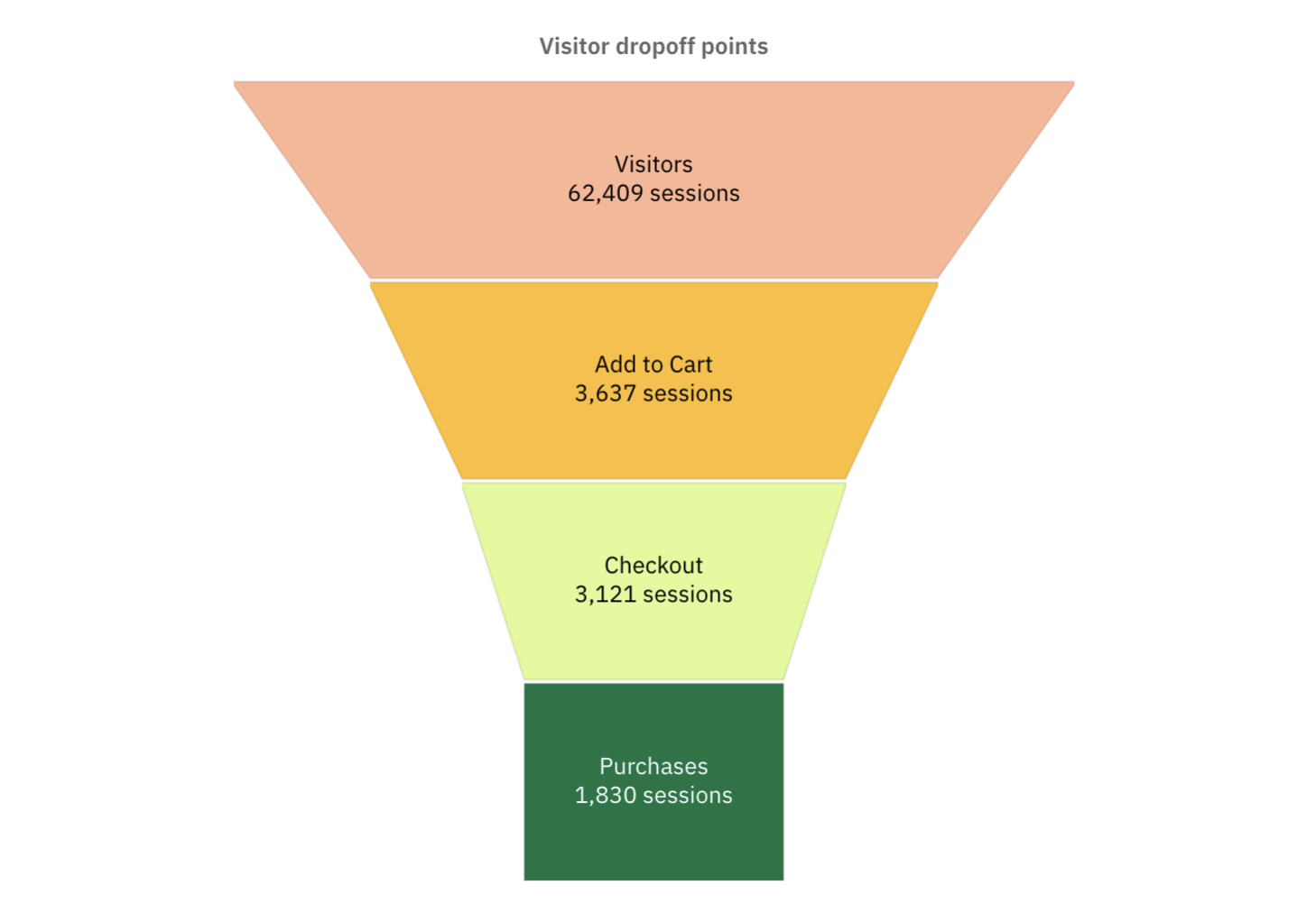
Here’s what we found during the audit:
- 58,772 visitors browsed products but never added anything to their cart.
- 516 shoppers added products but never started checkout.
- 1,291 shoppers reached checkout—the highest buying intent possible—but left before completing their purchase.
Assuming a conservative 20% email identification rate, thousands of these visitors could have received automated follow-up emails.
Instead, they disappeared.
The biggest revenue leak wasn’t abandoned carts
It was one-time customers.
When I examined the CRM data, a much larger problem emerged.
The brand had 70,782 active contacts, but almost all revenue depended on customers buying only once.
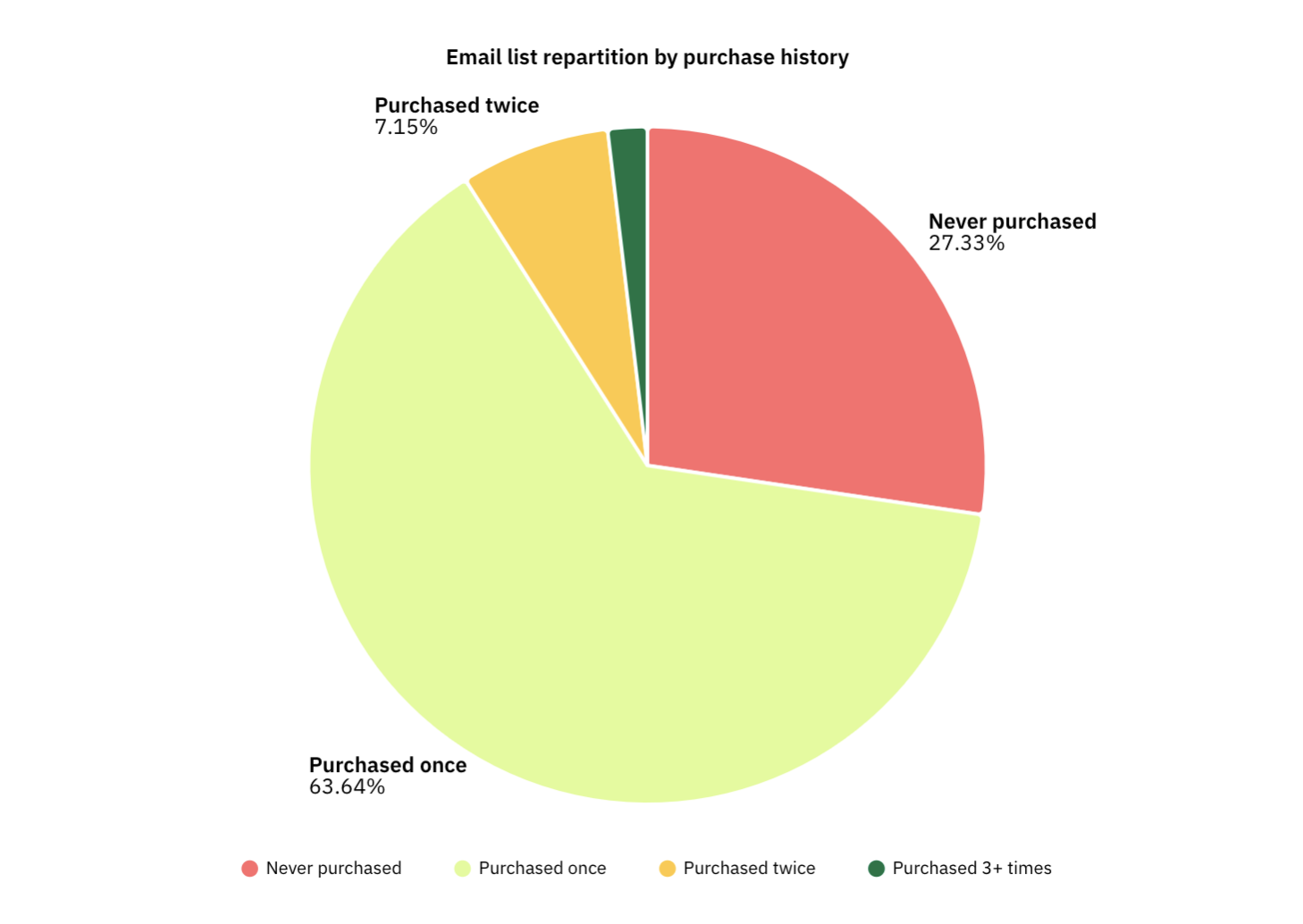
| Customer Segment | Contacts |
|---|---|
| Never purchased | 18,582 |
| Purchased once | 43,273 |
| Purchased twice | 4,861 |
| Purchased 3+ times | 1,281 |
Over 63% of the entire database consisted of customers who had made exactly one purchase.
That means the acquisition strategy was working. The retention strategy wasn’t.
Instead of building customer lifetime value, the business was repeatedly paying to replace customers who never returned.
Considering that acquiring a new customer typically costs 5–25× more than retaining an existing one, this was the single biggest growth opportunity in the business.
Another hidden problem was hurting every email campaign
The audit uncovered another issue that’s easy to overlook.
Nearly 2,800 subscribers hadn’t engaged with a single email in over 12 months.
These inactive subscribers don’t just sit quietly in your database.
They reduce email deliverability, making it harder for inbox providers like Gmail and Outlook to trust future email campaigns.
In other words, keeping these contacts was making it more difficult to reach the 67,997 subscribers who actually wanted to hear from the brand.
Sometimes growing email revenue starts by sending emails to fewer people.
How much revenue could be recovered?
After identifying the bottlenecks, I modelled the upside using conservative benchmarks from Klaviyo, Baymard Institute and Barilliance.
To avoid unrealistic projections, I also adjusted every estimate to reflect the brand’s existing 37.8% average email open rate.
Even with those conservative assumptions, the opportunity was substantial.
Opportunity #1: recover revenue from shoppers who already showed buying intent
People abandon carts for countless reasons: distractions. second thoughts, unexpected shipping costs, etc.
That doesn’t mean they’re lost forever.
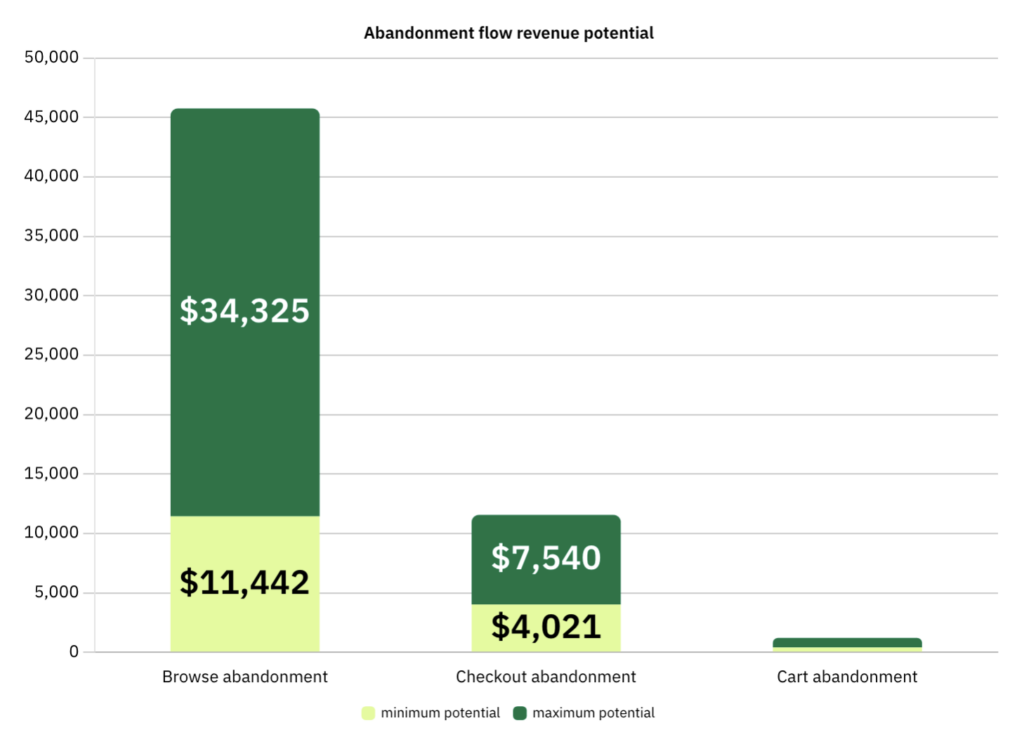
With automated recovery emails, the projected annual gains were:
| Flow | Revenue Potential |
|---|---|
| Browse abandonment | $11,442 to $34,325 |
| Checkout abandonment | $4,021 to $7,540 |
| Cart abandonment | $402 to $804 |
Potential annual impact: $15,865 to $42,669.
Opportunity #2: turn existing customers into repeat customers
This is where the biggest opportunity lives.
Instead of spending more to acquire new customers, the brand could generate significantly more revenue simply by encouraging existing customers to buy again.
Even modest improvements produce meaningful returns.
Converting just 5–15% of one-time buyers into repeat customers could generate: $39,805 to $119,416.
Re-engaging just 1–3% of existing subscribers who had never purchased would add another: $3,419 to $10,256.
Combined potential: $43,224 to $129,671.
Total opportunity: up to $172,340 without increasing ad spend
When we combined every opportunity identified during the audit, the results were clear.
| Source | Revenue |
|---|---|
| Behavioural recovery emails | $15,865 to $42,669 |
| Retention & lifecycle campaigns | $43,224 to $129,671 |
Total annual opportunity: $59,089 to $172,340
The most important takeaway isn’t the number itself.
It’s where that revenue comes from.
Not more traffic.
Not bigger advertising budgets.
Simply getting more value from people who already know the brand.
The 4-step roadmap to recover missed email revenue
Rather than trying to fix everything at once, we recommended tackling the highest-impact opportunities first.
1. Clean the email list
Remove or re-engage the 2,785 inactive subscribers to improve deliverability and increase inbox placement.
2. Recover high-intent shoppers
Implement or optimise browse and checkout abandonment flows to capture customers who were closest to buying.
3. Increase second purchases
Launch a dedicated post-purchase sequence for the 43,273 one-time buyers to encourage repeat orders.
4. Personalise first-purchase campaigns
Segment non-buyers using browsing behaviour, quiz responses and interests to create more relevant email journeys.
Your biggest revenue growth opportunity might already be in your email list
Most ecommerce brands assume they have an acquisition problem.
More often, they have a retention problem.
This audit showed that one footwear brand could unlock between $59,089 and $172,340 in annual revenue without increasing website traffic or spending another dollar on ads.
The customers were already there.
They simply weren’t receiving the right emails at the right time.
If you’re wondering how much revenue is hiding inside your own database, book your email retention audit to reveal where customers are dropping off, which lifecycle campaigns are missing, and what improvements will generate the biggest return.